The Red Fire Hydrant on Urban Sidewalks: Symbolism, Safety, and Design Resources
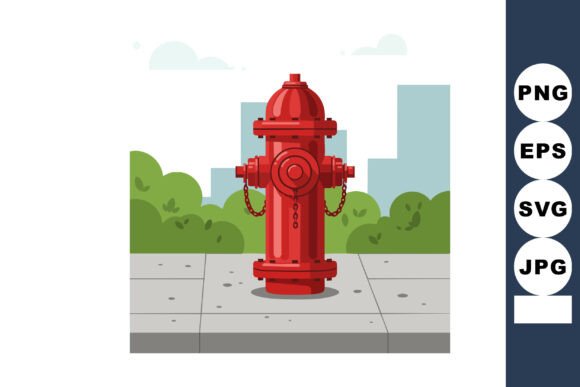
When navigating the concrete landscape of a modern city, few objects are as universally recognized yet frequently overlooked as the red fire hydrant. Standing steadfast on urban sidewalks, often framed by green bushes and towering buildings in the calm light of day, this piece of infrastructure serves as a silent guardian of public safety. While its primary function is strictly utilitarian, the red fire hydrant has transcended its mechanical purpose to become an iconic symbol of urban life, civic responsibility, and community resilience.
For designers, educators, and urban planners, understanding the nuances of this object goes beyond simple aesthetics. Whether you are creating educational materials about city infrastructure, designing safety signage, or illustrating urban environments, having access to high-quality visual assets is essential. This guide explores the significance of the red fire hydrant in our daily lives and introduces a comprehensive downloadable resource package containing SVG, EPS, JPG, and PNG files to support your creative and informational projects.
The Critical Role of Urban Water Infrastructure
To truly appreciate the imagery of a fire hydrant against a city backdrop, one must first understand the engineering marvel it represents. A fire hydrant is not merely a standalone post; it is the visible interface of a vast, pressurized underground network designed to deliver thousands of gallons of water per minute during emergencies. In the context of urban planning, these devices are strategically placed to ensure that no building is beyond the reach of emergency services.
The placement of a hydrant on a concrete sidewalk is governed by strict municipal codes and hydraulic calculations. Engineers must consider water main pressure, street width, building density, and pedestrian traffic flow. When you see an illustration depicting a hydrant nestled among greenery with buildings in the background, you are viewing a carefully orchestrated balance between safety requirements and urban aesthetics. The calm mood often associated with these daytime scenes belies the intense operational readiness required beneath the surface.
Why Red? Decoding Color Standards and Visibility
One of the most common questions regarding fire hydrants concerns their color. While hydrants come in various hues like yellow, silver, and orange to indicate specific flow rates or water sources, the red fire hydrant remains the cultural archetype. In many jurisdictions, red indicates a connection to a public water system or signifies a specific flow capacity class. However, in art and media, red is chosen for its immediate psychological impact.
Red provides maximum contrast against gray concrete sidewalks and green vegetation, ensuring high visibility even in peripheral vision. For illustrators and safety educators, utilizing the traditional red colorway helps audiences instantly recognize the object’s purpose without needing textual explanation. This semantic association makes the red hydrant an indispensable element in visual storytelling related to city life and emergency preparedness.
Visual Assets for Education and Professional Design
In the digital age, accurate representation matters. Whether you are a teacher explaining civic infrastructure to students, a business creating safety compliance documents, or a graphic designer working on an urban-themed campaign, generic clip art often falls short. High-fidelity illustrations that capture the texture of concrete, the vibrancy of the red paint, and the contextual depth of city buildings are necessary for professional results.
This is where specialized downloadable resources become invaluable. The illustration described here—a red fire hydrant on a concrete sidewalk with green bushes and city buildings in daylight—offers a versatile foundation for multiple use cases. Crucially, the availability of multiple file formats ensures compatibility across different platforms and workflows.
Understanding File Formats: SVG, EPS, JPG, and PNG
When downloading design assets, understanding the difference between vector and raster formats is essential for maintaining quality. The included ZIP file provides four distinct formats to cover every potential need:
- SVG (Scalable Vector Graphics): Ideal for web design and responsive layouts. SVGs are XML-based code that renders perfectly at any size without pixelation. This format is perfect for embedding directly into websites, interactive educational apps, or digital presentations where screen resolution varies.
- EPS (Encapsulated PostScript): The industry standard for print design and professional editing. EPS files retain vector data compatible with Adobe Illustrator, CorelDRAW, and other advanced software. Use this format if you need to modify colors, adjust composition, or scale the image for large-format printing like banners or posters.
- PNG (Portable Network Graphics): A raster format that supports transparency. Unlike JPGs, PNGs allow you to place the hydrant illustration over different backgrounds without a white box appearing around it. This is particularly useful for overlaying the asset onto existing photos or colored slides.
- JPG (Joint Photographic Experts Group): Best for general reference, quick previews, and non-transparent applications. JPGs offer excellent color fidelity and smaller file sizes, making them suitable for email attachments, basic document insertion, or social media posts where transparency is not required.
Integrating Hydrant Imagery into Modern Workflows
The utility of a well-crafted fire hydrant illustration extends far beyond decoration. In today’s multifaceted professional landscape, such assets serve practical functions across various sectors.
Education and Community Awareness
Educators and community leaders often struggle to make infrastructure topics engaging. A high-quality illustration showing the hydrant in a realistic, calm urban setting helps demystify city systems for learners. It can be used in textbooks, safety pamphlets, and classroom slides to teach concepts ranging from fluid dynamics to civic duty. The inclusion of environmental elements like bushes and buildings provides context, helping students understand how infrastructure integrates with the natural and built environment rather than existing in isolation.
Business and Corporate Communications
For businesses in insurance, real estate, construction, and municipal consulting, visual accuracy builds trust. Using professional-grade illustrations in reports, proposals, and marketing materials signals attention to detail. A crisp, vector-based hydrant image conveys professionalism far better than a blurry screenshot. Furthermore, owning the proper file formats allows companies to maintain brand consistency across diverse media channels without worrying about licensing issues associated with stock photography sites.
Creative Projects and Urban Storytelling
Writers, game developers, and content creators often need to establish a sense of place quickly. The specific combination of a red hydrant, concrete texture, and urban foliage acts as visual shorthand for "city." In video games or animated stories, these assets can be repurposed as environmental props. Because the provided EPS and SVG files are editable, artists can easily recolor the hydrant to match fictional worlds or alter the background buildings to fit specific narrative settings.
Common Misconceptions About Fire Hydrants
While exploring this topic, it is helpful to address a few widespread misunderstandings that persist in popular culture. Clarifying these points adds depth to any educational or informational content featuring hydrant imagery.
- Hydrants Are Not Always Connected to Drinking Water: While many are, some industrial zones use separate non-potable water systems for firefighting. Illustrations should ideally reflect accurate labeling if technical precision is required.
- Opening a Hydrant Is Not Simple: Movies often depict characters opening hydrants effortlessly. In reality, they require specialized wrenches and significant force to operate safely. Educational content should emphasize that unauthorized tampering is dangerous and illegal.
- Color Does Not Always Equal Pressure: While NFPA standards suggest color-coding for flow rate, local municipalities often have their own legacy systems. Always verify local codes rather than assuming universal color meanings.
Maximizing the Value of Your Download
Accessing a ZIP file with SVG, EPS, JPG, and PNG versions of a red fire hydrant illustration is more than just acquiring a picture; it is an investment in versatile communication tools. To get the most out of these assets, consider organizing them within your digital asset management system with clear metadata tags such as "urban safety," "fire prevention," "infrastructure," and "vector art."
When using the vector files (SVG/EPS), remember that you can isolate individual elements. Need just the hydrant without the bushes? You can ungroup the layers in your design software. Need to change the time of day from daylight to dusk? Adjusting the gradient fills in a vector file takes seconds, whereas editing a raster JPG would require complex photo manipulation. This flexibility transforms a single static image into a dynamic library of visual possibilities.
Conclusion: Bridging Function and Form
The red fire hydrant standing on a concrete sidewalk is a testament to the intersection of engineering necessity and urban identity. It represents safety, order, and the invisible networks that sustain city life. By understanding both the physical reality of this infrastructure and the digital tools available to represent it, we can communicate more effectively about the spaces we inhabit.
Whether you are teaching the next generation about civic systems, designing critical safety materials, or simply appreciating the quiet aesthetics of urban landscapes, having the right visual resources makes a difference. The downloadable collection of SVG, EPS, JPG, and PNG files ensures that you have the precise format needed for any application, empowering you to create content that is as reliable and enduring as the hydrant itself. Embrace these tools to tell clearer, more impactful stories about the world around us.